Cerebro
Creator
The problem
An AI agent that starts every conversation from zero has no voice of its own — it just repeats whatever it's told in the moment. Every new session means rebuilding context from scratch: who's who, what was decided and why, what's still pending. For someone juggling half a dozen parallel projects (a mushroom-cultivation client, an AI study group, a master's thesis, a personal venture) that constant reconstruction is the real hidden cost of working with a memoryless agent.
The challenge wasn't just archiving information — a passive archive doesn't solve anything. It was building a memory layer the agent could actively read and write to, following the same care a person would: never invent data, never merge identities without confirmation, and above all, never expose sensitive information about third parties.
The solution
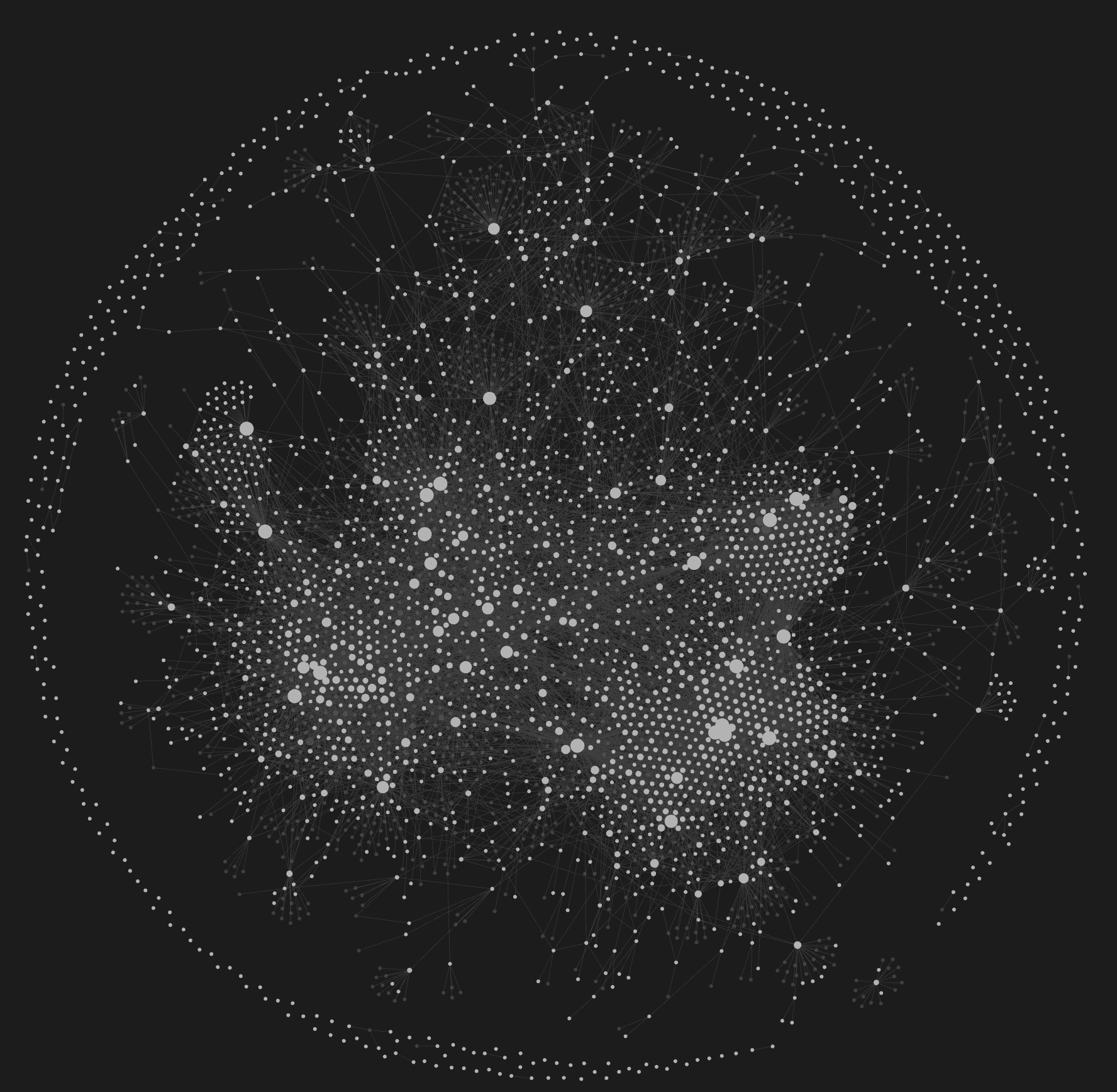
Cerebro is an Obsidian vault built from 36 real Google Meet recordings, processed, corrected, and maintained by an AI agent. It's not a static summary — it's a living system with its own conventions.
Structured by domain — people, projects, decisions, figures, meetings — where every person note carries an identidad field (confirmed, to confirm, conflict) telling the agent exactly how sure it can be about what it knows. Every business decision is logged with its reasoning and what was discarded, not just the outcome. A kanban board lives inside the same vault, with tasks staying in the note where they were born and an aggregated view assembled with Dataview.
The agent does the heavy lifting itself: reads new transcripts, detects when two person notes are actually the same individual (or when they look alike but there isn't enough certainty to merge), and corrects errors inherited from automated summaries — one real case was a fabricated "$50 million deal" that the original AI summary invented by stitching together two unrelated sentences.
Technical decisions
Obsidian + plain Markdown — no database, no backend. Every note is a text file; structure lives in YAML frontmatter and [[wikilinks]] between notes. That keeps the vault readable by both a human and an agent with zero translation layer.
Dataview for dynamic views — the task board, the people/project indices, and coverage reports are all assembled with Dataview queries over the actual content, instead of hand-maintained lists that go stale.
Git + a pre-commit hook for privacy — any note flagged privado: true in its frontmatter is excluded via .gitignore and blocked by a pre-commit hook, so that content can never accidentally reach a remote repository. A script (verificar-privacidad.sh) runs before every push to confirm nothing private slipped through.
Explicit conventions in CLAUDE.md — the rules the agent must follow without exception (never invent data, never merge people without confirmation, never extract third-party health information) are written where the agent reads them at the start of every session, not scattered across the memory of past conversations.
Results
Cerebro processed 36 recordings, resolved more than a dozen cases of duplicated or mis-transcribed identities, and maintains an active task board with a hard work-in-progress limit. But the most important result isn't the content — it's that an agent can now open a brand-new conversation, read this vault, and pick up exactly where it left off, with real memory and the same privacy discipline that any sensitive third-party information would demand.
At its core, it's an experiment in what it means to give an agent continuity: not more context crammed into one conversation window, but persistent memory that lives outside it.